Top DocSend Alternatives for Startup Fundraising (2026)

Artem Axelrod
Co-Founder @ Pageform | AI-native narrative data rooms for fundraising & deals

TL;DR: DocSend is expensive and treats your fundraising materials like a glorified folder. Better alternatives include Pageform (narrative-driven data rooms), Notion (DIY approach), Google Drive (budget option), Ansarada (high-stakes transactions), and Ideals (enterprise-level due diligence). Choose based on your budget, technical comfort, and whether you want a story-driven investor experience or just file sharing.

Top DocSend Alternatives for Fundraising in 2026
I'm Artem, founder of Pageform, so take this with appropriate context. But I built Pageform specifically because I was frustrated with existing data room solutions, DocSend included.
Don't get me wrong, DocSend pioneered the data room space. But after years of watching founders struggle with its limitations (and pay $300+ monthly for the privilege), I knew there had to be better ways to share fundraising materials.
Here are the best alternatives I've found, tested, and in some cases, built myself.
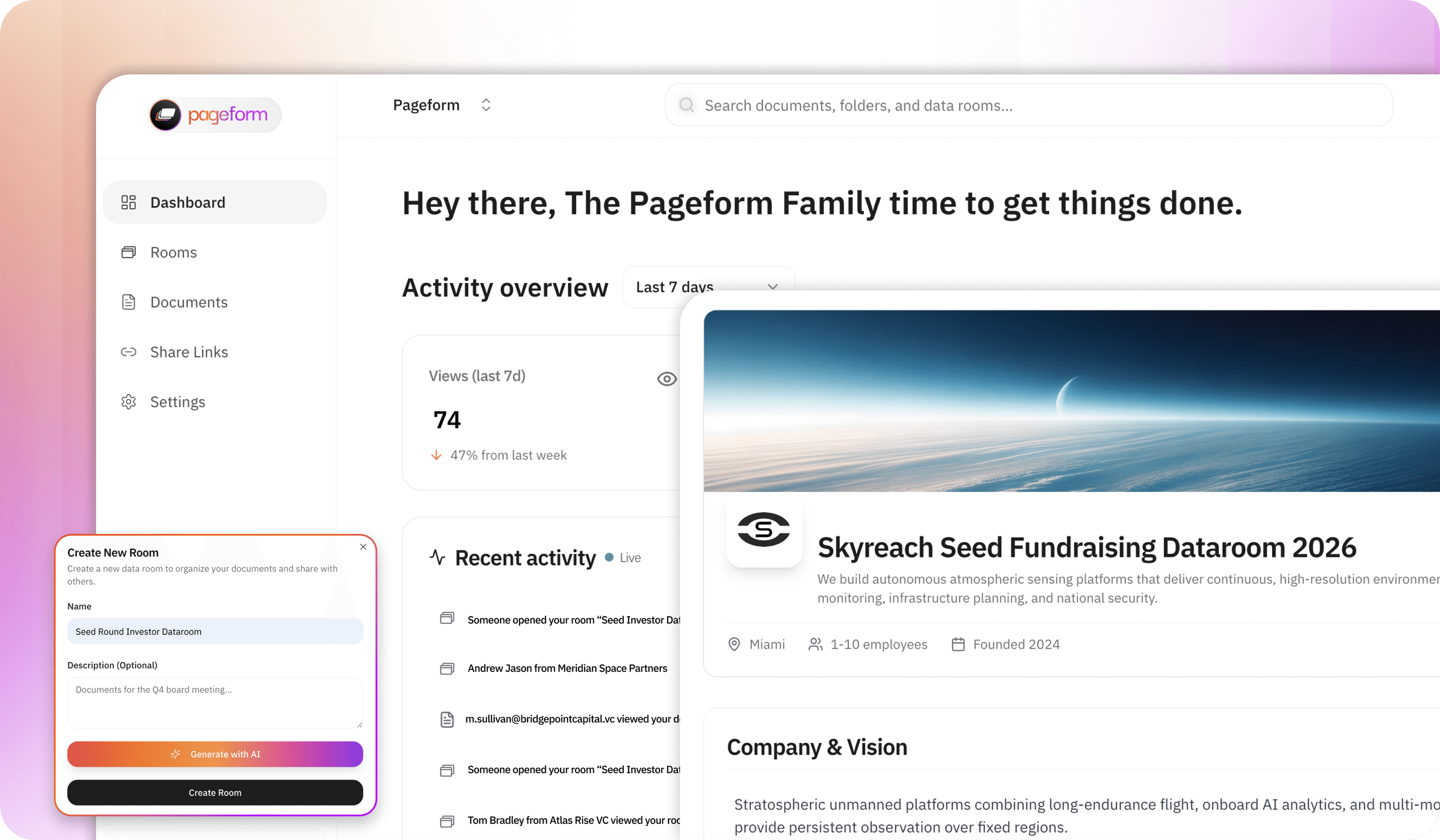
1. Pageform (Best for Narrative-Driven Fundraising)
I built Pageform because your data room shouldn't be a folder. Instead of dumping documents into categories, Pageform lets you create a guided story that walks investors through your vision, traction, and opportunity.
The Custom Canvas Builder is our standout feature. You can embed documents directly into custom pages, add context around each section, and create a flow that makes sense for your specific story. When I tested this with early users, they consistently told me investors were spending 3x longer in their rooms compared to traditional folder-based approaches.
Our Live Viewer Intelligence gives you section-level analytics, so you can see exactly which parts of your story resonate (or don't). Plus, we have all the table stakes: NDA gating, Q&A, document watermarking, and white-label options on higher plans.
Pricing: Free (1 room, basic features), Docs $25/mo, Core $55/mo, Pro $110/mo
Limitations: We're newer, so we don't have some enterprise features larger companies might need. Also, if you just want to dump files in folders without any narrative structure, we're probably overkill.
Best for: Founders who want to tell a compelling story, not just share documents. Especially good for pre-seed through Series A companies who care about investor engagement, not just document access. Tested with top U.S. investors for ultimate viewer and workflow optimization.
2. Notion (Best DIY Alternative)
Notion has become surprisingly popular for fundraising data rooms, and I get why. You can sophisticated, pretty pages that tell your story while embedding documents, metrics, and media all in one place.
The biggest advantage? Most founders already know how to use it from CRM and scheduling pages, and you can create something niche and custom. I've seen some incredibly creative Notion data rooms that put traditional folder-based approaches to shame.
The downsides are real though. No built-in analytics (you'll need to use link shorteners), limited permission controls, and it takes significant time to build something professional-looking. Plus, Notion can be slow with large files.
Pricing: Free for basic use, Plus $8/month for more features
Best for: Technical founders comfortable with DIY solutions who want maximum customization and don't need detailed viewer analytics and insight into who has seen what.

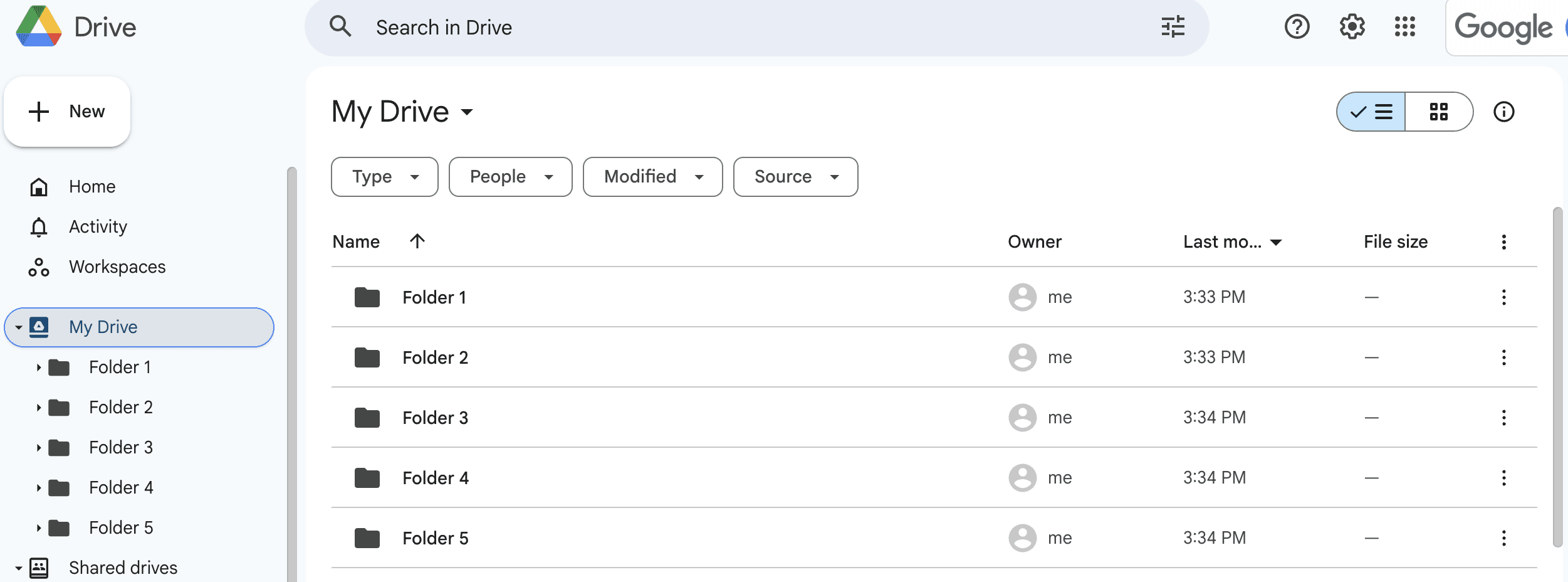
3. Google Drive (Best Budget Option)
Let's be honest: Google Drive is what most early-stage founders actually use. It's free, familiar, and gets the job done when you're bootstrapping.
You can create a folder structure, use Google Sites to create a simple landing page, and share everything with appropriate permissions. The collaboration features are great, and most investors can access it without creating new accounts.
But it definitely looks unprofessional compared to purpose-built solutions. No analytics, limited branding, and the user experience screams "we couldn't afford a real data room." Sometimes that's fine, especially for very early friends and family rounds where relationships matter more than polish.
Pricing: Free for 15GB, $6/month for 100GB
Best for: Pre-seed founders who need to share documents quickly and cheaply, especially when fundraising from people who already know them well.
4. Ansarada (Best for High-Stakes Transactions)
Ansarada is an enterprise-grade virtual data room built for investment bankers, M&A advisors, law firms, and private equity teams managing complex, high-value transactions. It can also be used by startups, but the deals on their homepage involve billion-dollar acquisitions, public housing projects, and Series G rounds. That tells you exactly who this product is built for.
If you are a pre-seed or Series A founder, Ansarada is significant overkill. The interface is built around control and compliance, not storytelling or investor engagement. There is no narrative flow, no guided experience, and pricing is custom, which is another way of saying it scales to enterprise budgets.
Pricing: Custom, quote-based.
Best for: Later-stage companies going through formal M&A, IPO prep, or institutional fundraising processes where the investor's legal and finance teams are driving diligence. If a banker or advisor is running your process, they probably already know Ansarada.
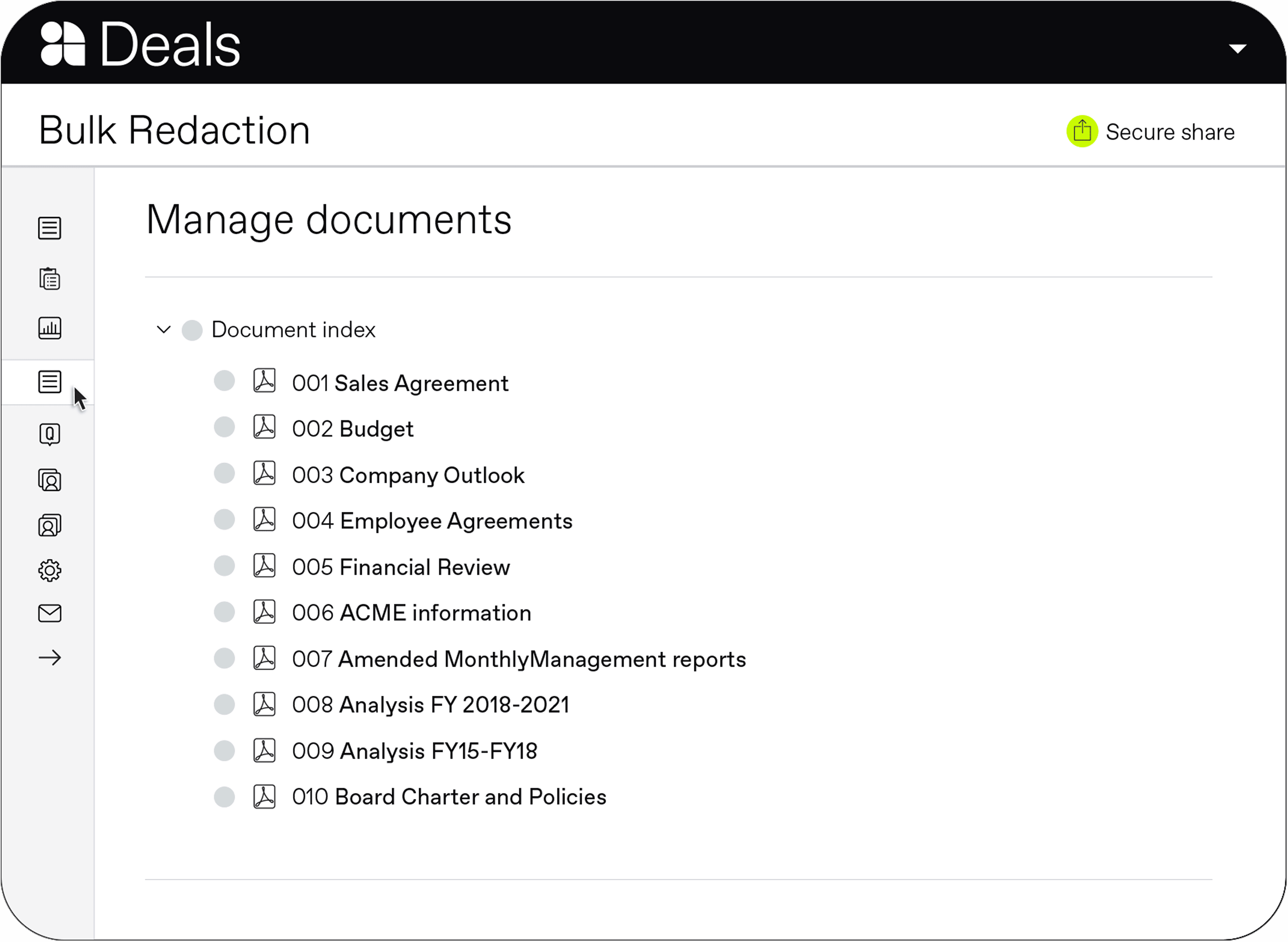
5. Ideals (Best for Formal Due Diligence)
Ideals is a virtual data room built for M&A, legal diligence, investment and enterprise transactions. It’s often used when fundraising moves into more formal, process-heavy diligence.
If you have seen one of those sterile, folder-heavy rooms during a formal acquisition process, there is a good chance it was running on something like Ideals. If your round has crossed into formal institutional diligence territory and your investors are asking for a structured, auditable process, it holds up. For everyone else, it is more infrastructure than you need.
Pricing: Custom, typically starts around $99/month and increases with advanced features
Best for: Series C+ and later-stage companies or diligence-heavy rounds where structured process and control matter more than presentation or engagement
How to Choose the Right Alternative
The honest answer is that most of these tools will let you share documents. The difference is what happens after you hit send. Your choice depends on three main factors:
Stage: Early-stage founders often default to simple tools, but that usually creates friction later. As you move into serious conversations, structure and visibility start to matter.
Story complexity: The more nuanced your business is, the less folders work. If investors need context, flow, and clarity, you need a narrative-driven approach.
Budget: DocSend charges $300+ monthly for a folder with analytics. Expensive tools don’t guarantee better outcomes. The goal isn’t to pay more, it’s to make your materials actually get read and understood.
When I built Pageform, I was specifically solving for founders who wanted to tell compelling stories without paying enterprise prices. But honestly, the best solution is the one you'll actually use consistently and that matches how you think about presenting your company.
Michael Palank from MaC Venture Capital told me "This is what every data room should look like" after seeing a Pageform room, which was validating. But I also know that different approaches work for different founders and different investor relationships.
Ready to Move Beyond Folders?
If you want to create a narrative-driven fundraising experience that engages investors instead of just sharing files, try Pageform free. No credit card required, and you can have a professional data room running in minutes.
👉 Turn your data room into your strongest fundraising asset with Pageform. Start free right now.