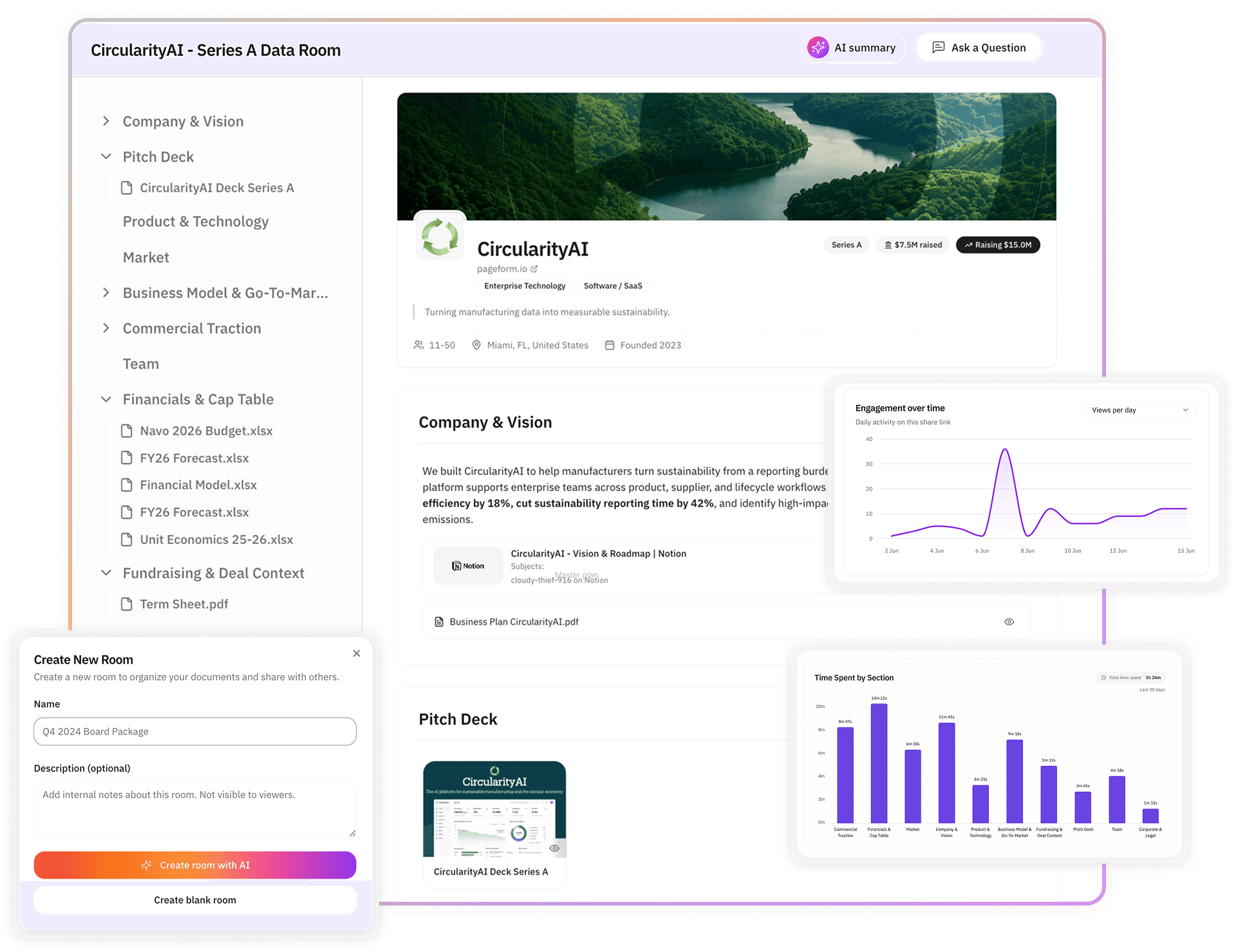
What can an AI-Native Data Room do for your raise?


Artem Axelrod
Co-Founder @ Pageform | AI-native narrative data rooms for fundraising & deals

Benefits of an AI-native data room
If you are raising or sending materials to investors, an AI-native data room does 3 things a folder never will. It builds the room for you, so you stop losing days to structure and formatting. It does the work you would otherwise pay a fractional finance firm or a fundraising consultant to do, from organizing the materials to auditing them for gaps. And it debriefs you after you share, showing you exactly how each investor moved through your materials and where their attention stalled.
The point is not that the software has AI bolted on. The point is that the work of preparing, pressure-testing, and reading a data room now happens inside one chat instead of across three tools, a spreadsheet, and a consultant's invoice. This is what that looks like in practice, using Pageform AI Native Virtual Data Room as the example.
AI Agent saves you the days you would lose building the room
Building an investor data room by hand is slow in a way that never shows up in your calendar. You export the deck. You rename the financial model for the fourth time. You decide whether the cap table goes under "financials" or "legal." You reorder folders. You write section descriptions. None of it moves your raise forward, and all of it eats a day you did not have.
An AI-native room starts from a conversation instead. In Pageform, you describe the deal and attach your materials, the deck, the model, the cap table, the incorporation docs, and the AI Agent drafts a structured room. Deal summary first. Then the story, the financials, the team, the legal stack. It orders the sections the way an investor reads, not the way your desktop stored the files.
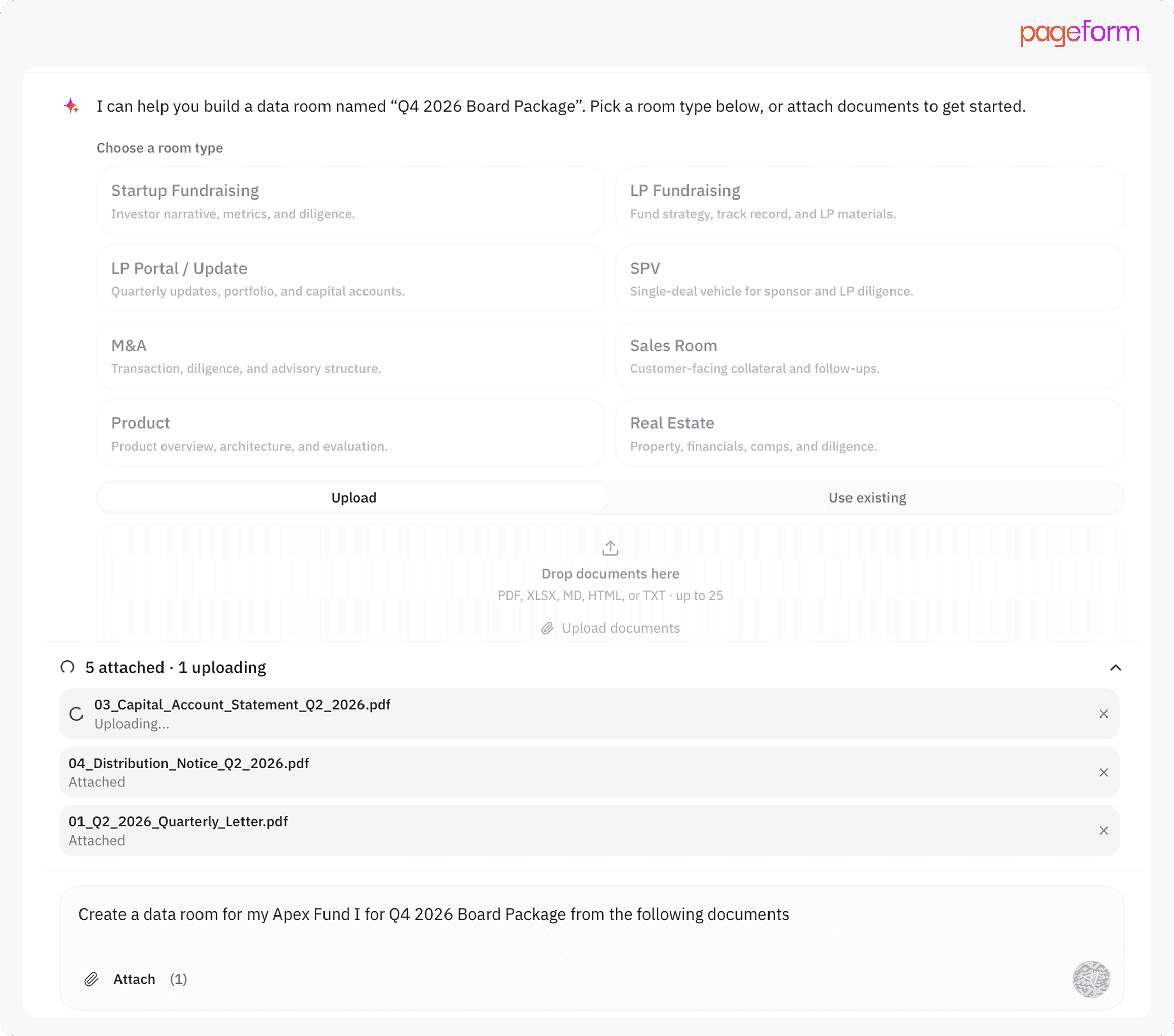
You keep editing in the same chat. Move a section. Rewrite a summary. Ask it to tighten the narrative on the traction page. You are not clicking through a file manager, you are talking to something that already understands the shape of an investor room. What used to take an afternoon of formatting takes the time it takes to describe the deal. For a deeper look at how the Agent organizes and structures materials, our walkthrough on how AI can organize and audit a fundraising data room goes step by step.
The time saved is not just yours. Every hour an investor spends hunting for a document is an hour they are annoyed at you. A clean, well-ordered room is faster for them too, and speed on their side is what keeps a raise warm.
It does the work you would otherwise outsource
Here is the part most founders and fund managers do not say out loud. When a raise gets serious, plenty of people pay to make the materials presentable. They hire a fractional CFO shop or a startup finance firm, the kind of work firms like Burkland Associates and other fractional finance providers are known for, to clean up the model, sanity-check the numbers, and get the diligence file in order. Others lean on a fundraising consultant to tell them what is missing before an investor does. That help is real, and it is not cheap.
An AI-native room absorbs a meaningful slice of that work. Not the strategic judgment, and not the accounting itself, but the organizing, the structuring, and the gap-checking that a consultant would charge you hours for.
In Pageform, you run a room audit. You ask the AI Agent to check the room for gaps a diligent investor will find. It flags the missing sections, the pref that appears in your deck but not your documents, the track record that names two deals but shows numbers for one, the risk factors you skipped. It is doing the "what did I forget" pass that a consultant does on a call, except it does it in seconds and you can run it as many times as you want.
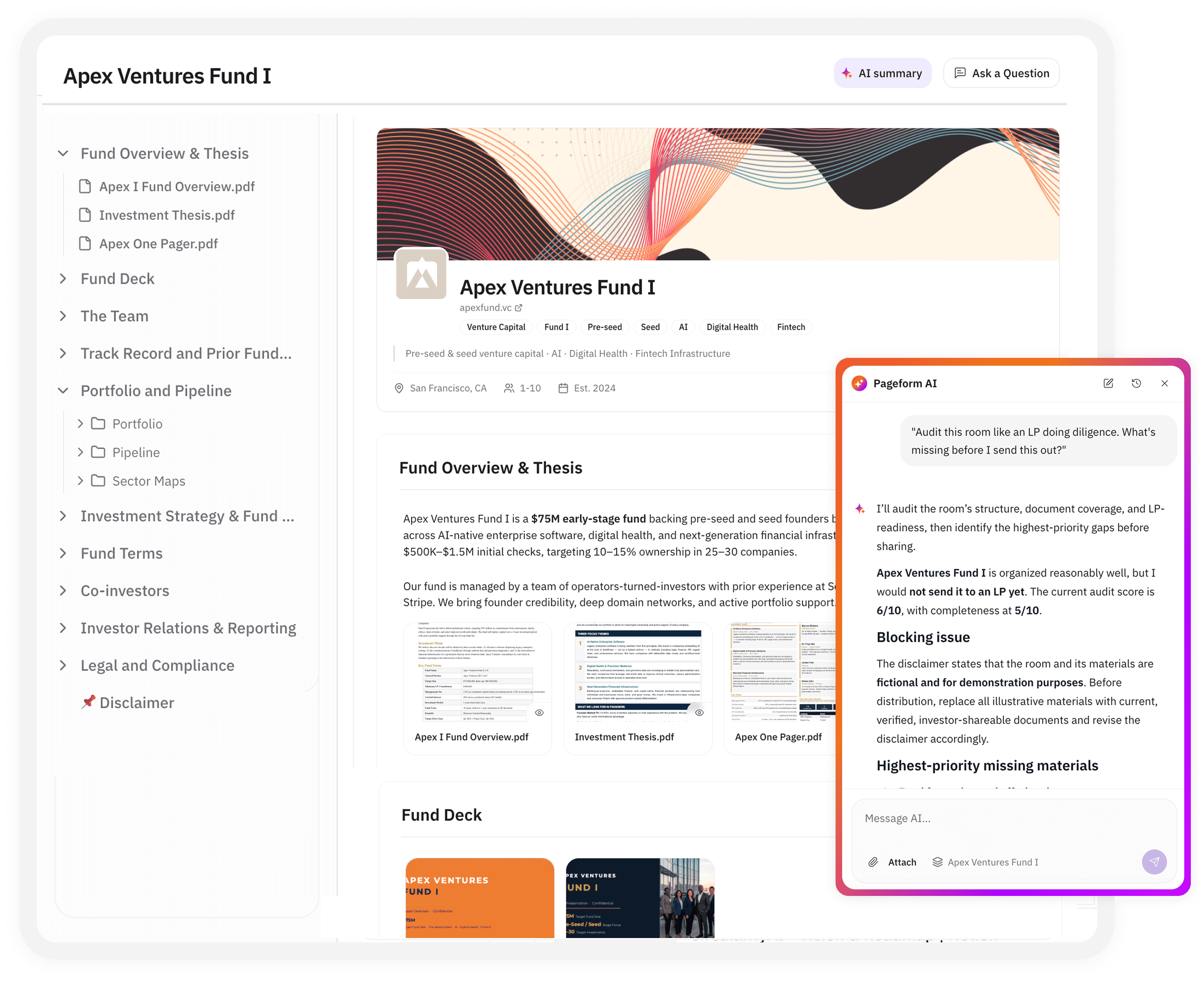
You can also ask the Agent questions about the room's contents, the same way an investor might. That surfaces the weak spots before a real investor hits them. When your answer to "where is the customer concentration breakdown" is a two-minute fix instead of a scramble, you look prepared, because you are.
To be clear about the honest limit, this does not replace your accountant, your lawyer, or a consultant's strategic advice on how to position a hard raise. It replaces the expensive, repetitive prep work that sits underneath all of that. For a lean team, that is often the difference between shipping the room this week and pushing the raise another two. If you want the fuller picture of what "AI-native" means here versus a normal data room with a chatbot stapled on, we broke it down in AI data room for fundraising explained.
It debriefs you on what investors actually did
This is the pillar that changes how you run the raise, not just how you prep for it. Once you share the room, an AI-native platform tells you what happened inside it.
A folder tells you nothing. You send a link and then you guess. Did they open it? Did they read the whole thing or bail on page two? Are they excited or just polite?
Pageform shows you the answer at the page level. You see who opened the room, how long they spent, and exactly which pages held them. [Screenshot: the engagement analytics dashboard showing per-viewer, page-level activity] When an investor opens the room three times and keeps returning to the financial model and the debt assumptions, that is not idle browsing. That is a buyer working through the one thing between them and a yes.
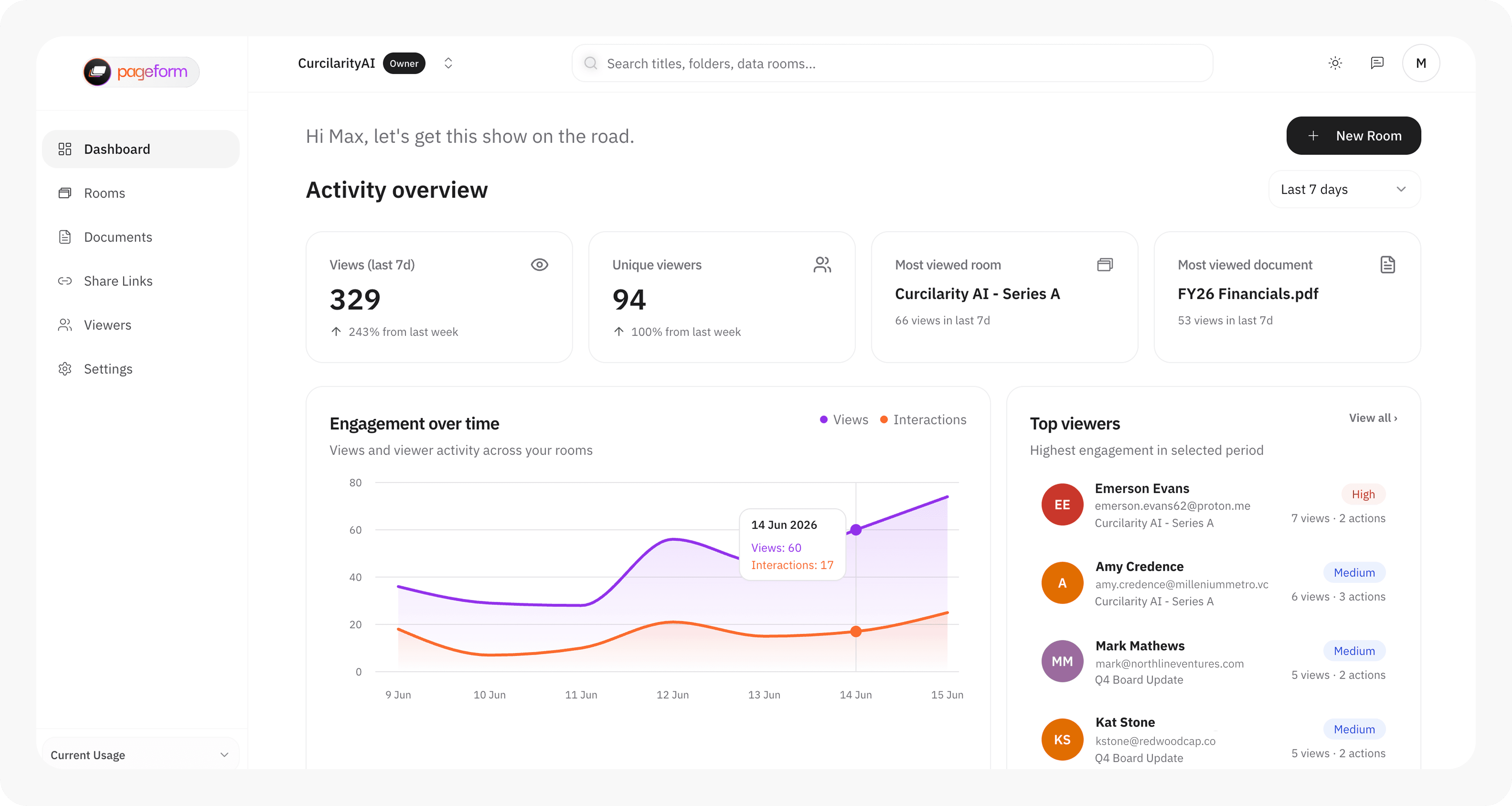
You use that to run a smarter follow-up. You do not send everyone the same generic nudge. You open your next call with the exact section that held their attention. You reach the investor who went quiet before they fully cool off. The signal tells you where to spend your time, which is the scarcest thing you have during a raise. Our guide on how to track investor engagement in your data room covers how to read each pattern.
The debrief is where the AI-native part compounds. The room that built itself and audited itself now reports back to you, so every share teaches you something about who is close and what is landing.
How the three come together in one raise
Picture a seed founder on a Monday. She describes her round to the Agent and attaches her deck, model, and cap table. Twenty minutes later she has a structured room. She runs an audit, fixes the two gaps it finds, and shares the link with eight investors that afternoon. That is pillar one and two, done before lunch, without a consultant invoice.
By Thursday, the analytics have separated the eight. Two never opened it. Three skimmed and left. Three returned more than once, and one of those sat on the financials for eleven minutes. She knows exactly who to call and what to lead with. That is pillar three, turning a silent inbox into a ranked list.
None of this required a new hire, a new tool, or a week of formatting. It required describing the deal and reading the room.
What it does not do, honestly
An AI-native room is not a substitute for a good business, a real model, or human judgment on a hard negotiation. It will not invent traction you do not have, and it should not. It will not give you legal or tax advice. What it does is remove the friction between having your materials and getting them in front of investors in a form that reads well, holds up to scrutiny, and reports back on how it landed. That is a large share of the busywork in a raise, and it is the share that AI is genuinely good at.
FAQ
What makes a data room "AI-native" instead of just having AI features?
An AI-native room is built around the AI doing the work, not a chatbot added to a file store. In Pageform, you generate the room from a conversation, edit it in that same chat, audit it for gaps, and ask questions about its contents. The AI is the way you build and operate the room, not a widget in the corner.
Can it really replace a fundraising consultant or a fractional finance firm?
It replaces a slice of that work, the organizing, structuring, and gap-checking, not the strategic judgment or the accounting itself. For a lean team, absorbing that repetitive prep is often enough to ship the room without paying for hours of it. Keep your accountant and lawyer for what they are actually for.
How much time does building a room from a prompt actually save?
The manual version is an afternoon of exporting, renaming, and reordering files, repeated every time your materials change. Building from a conversation collapses that into the time it takes to describe the deal and attach the documents. The bigger saving is on every edit after, since you change the room by talking to it.
What do the engagement analytics show me?
Who opened the room, how long they spent, and which pages held their attention, at the page level per viewer. You use it to prioritize follow-up, to lead calls with the section an investor cared about, and to reach investors who went quiet before they lose interest.
Is my information controlled if the AI can see it?
The room is permissioned and gated. AI Agent usage runs against your plan's AI credits, and the audit and Q&A work on your room's own contents to help you prepare. You still control who can access the room and what each viewer sees.
See it on your own raise
Pageform is an AI-native, narrative-driven data room designed for fundraising, sales, and partnership deals. Describe your round, attach your materials, and the AI Agent builds the room, audits it for gaps, and shows you how investors move through it. See plans on the pricing page or start for free at pageform.io.